
Among the new entries, the largest by market capitalisation are LIC, Avenue Supermarts (DMart), Adani Green Energy, Zomato and Jio Financial Services.

State Bank of India (SBI), India's largest lender, is looking to raise Rs 10,000 crore through 15-year infrastructure bonds as early as next week, said multiple sources aware of the development. Market participants expect a coupon in the range of 7.15-7.18 per cent for SBI's upcoming infrastructure bond issuance. This comes as demand for longer-tenor papers has remained strong in recent domestic capital market offerings.

Even as the high inflation figure for October has ruled out any possibility of a rate cut by the Reserve Bank of India's (RBI's) monetary policy committee (MPC) in December, a rate cut in February also looks uncertain due to global uncertainties. Economists told Business Standard that unless domestic growth slows markedly, the outlook on rate cut remains unclear. India's headline inflation touched a 14-month high of 6.2 per cent in October, breaching the MPC's upper tolerance band of 6 per cent.

China has stayed on top for two consecutive months in the MSCI Emerging Markets Investable Market Index (EM IMI), after ceding the position to India in August. At the end of October, China's weight in the key EM gauge stood at 24.72 per cent, up from 21.58 per cent at the end of August. India's weight during this period has slipped to 20.42 per cent from 22.27 per cent.
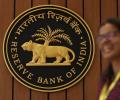
The government has invited applications for the post of deputy governor of the Reserve Bank of India (RBI) from interested candidates with at least 25 years of experience and below 60 years of age as on January 15, 2025. One of the deputy governors, Michael Patra's current term will end on 15 January. The last date of submission of applications is November 30, 2024.

On the cusp of launching its Rs 11,327 crore initial public offering (IPO) next week, food and grocery delivery major Swiggy believes quick commerce to be its future growth engine and anticipates that it will outpace its core food delivery business over the next five years. Currently, the quick commerce business of Swiggy - backed by Prosus and SoftBank - is 40 per cent of the size of its food delivery revenues.

'Margins will be an outcome of that. They will likely remain somewhat range-bound.'
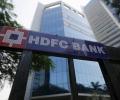
The country's largest private sector lender HDFC Bank on Saturday said it will grow its loan book slower than the industry in the current financial year (FY25). The move comes as the lender looks to bring down its elevated credit - deposit (CD) ratio to pre-merger levels. "We will bring down the CD ratio faster than what we had anticipated.

Hyundai Motor India Limited's (HMIL's) record Rs 27,870 crore initial public offering (IPO) may not have set the primary market alight with sky-high subscription levels, but it has spelled a windfall for the five investment banks steering the share sale. The Indian arm of the South Korean carmaker paid Rs 493 crore - 1.77 per cent of the issue size - in fees and commissions to the book running lead managers (BRLMs), marking the largest-ever payout for an IPO in the country.

Hyundai Motor India (HMIL) raised Rs 8,315 crore from anchor investors on Monday, setting the stage for the country's biggest-ever maiden share sale. The Indian arm of the South Korean carmaker Hyundai Motor Company (HMC) allotted 42.4 million shares to 225 funds at Rs 1,960 apiece, the higher end of its price band. Among the investors receiving allotments were the Singapore government's sovereign wealth fund (GIC), New World Fund, and Fidelity.

India's stock markets are experiencing a shift in investor sentiment, with a 30 per cent surge in Chinese stocks, prompting investors to move money from domestic markets to China. This reversal of fortunes is a notable change from the past three years, where China's losses benefited India.

India's second-largest passenger vehicles firm will be valued at Rs 1.59 trillion at the top-end of the price band of Rs 1,865-Rs 1,960.

The Indian markets have delivered high long-term returns, second only to the US.

The Securities and Exchange Board of India (Sebi) on Monday approved the introduction of a new asset class, designed to offer greater flexibility to fund managers and target investors with a higher risk appetite. The markets regulator also cleared the liberalised Mutual Funds Lite (MF Lite) framework, aimed at fund houses that solely launch passively managed schemes. In another significant move, the board reduced the timeframe for rights issues from the current 317 working days to just 23.

The Reserve Bank of India (RBI) on Monday directed banks and non-banking financial companies (NBFCs) offering gold loans to thoroughly review their policies, processes, and practices to identify any gaps. The central bank also told them to closely monitoring their gold loan portfolios amid significant growth observed in this segment vis--vis some lenders. Additionally, the RBI, through a circular, instructed these lenders to ensure adequate controls over outsourced activities and third-party service providers.

'So, we would work with our members to ensure that we as an SRO create some sort of due diligence for fintechs.'

Allocation to bank deposits -- fixed deposits, savings account deposits, and current account deposits -- came down.

Balance-level delinquencies in the credit card segment saw a 17 basis points (bps) year-on-year (Y-o-Y) rise in the quarter ending June 2024 (Q1FY25). In all other credit segments, including personal loans, delinquencies declined even as retail credit growth moderated, consequent to banks tightening the supply of credit to the unsecured segments, a report by TransUnion CIBIL said on Monday. Data shows that balance-level delinquencies, measured in terms of 90 days or more past due, in the credit card segment stood at 1.8 per cent in Q1FY25- highest among all other credit segments.

Bajaj Housing Finance Ltd's impressive stock market debut has brought cheer to the 100-year-old Bajaj Group, but the conglomerate faces the prospect of Bajaj Finserv being removed from the benchmark Sensex index. According to market expectations, Trent, a Tata group-owned fashion retailer, is likely to replace Bajaj Finserv during the upcoming index rebalancing in December.

State-owned Life Insurance Corporation (LIC) announced on Monday that it had signed up tech giant Infosys to develop a next-generation digital platform that will act as the foundation for new high-value business applications, such as customer and sales super apps, portals, and digital branches. The financial terms of the deal remain undisclosed. The tie-up with Infosys is part of LIC's "long-drawn" strategy, said a senior executive of India's biggest insurer, who noted that the IT giant "won the bid to develop the next-generation platform through a request for proposal (RFP) process".
 © 2026 Rediff.com - Advertise with us - Disclaimer - Privacy Policy - Sitemap - Feedback - About us - Terms of use - Grievances